MAIN | MMA GYMS | MMA IN CANADA | MMA YOUTH
Mixed Martial Arts ensure fighter safety and protection. From the clothes and equipment, to the rules and regulations.
ILLEGAL MOVES
Any fighter that purposely or accidentally does any of the following will be warned or disqualified depending on the frequency and context of the action. The recipient also receives recovery time. These rules are also outlined in a MMA Rules: 10 Most Illegal Moves article.
Groin shot – If a fighter gets a shot to the groin the referee will temporarily stop the fight and allow the recipient up to five minutes to recover.

The groin shot
Fish hooking – Using your fingers to hook your opponent’s mouth, nose, or eyes.
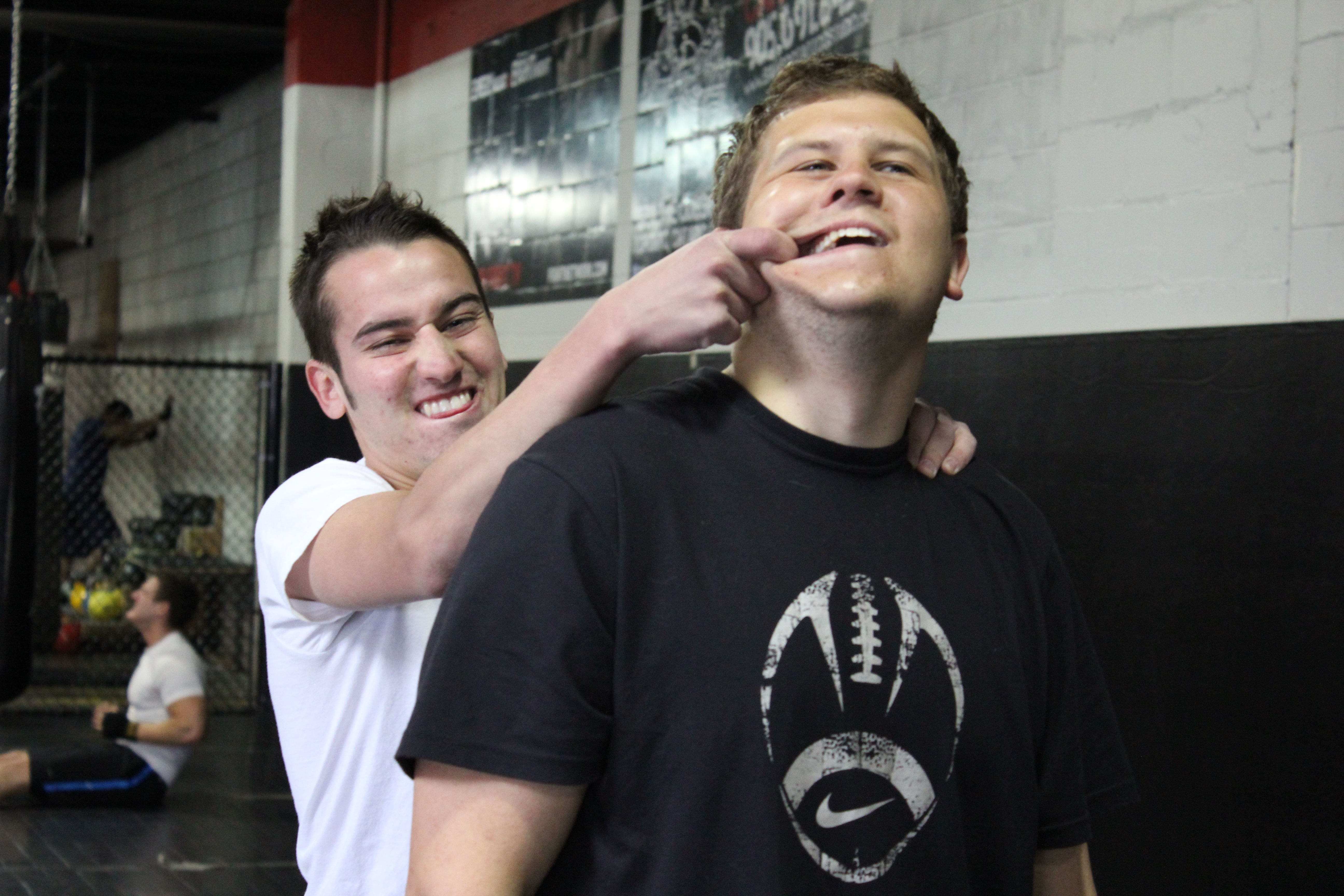
The Fish Hook
Punching the back of the head – Self explanatory.
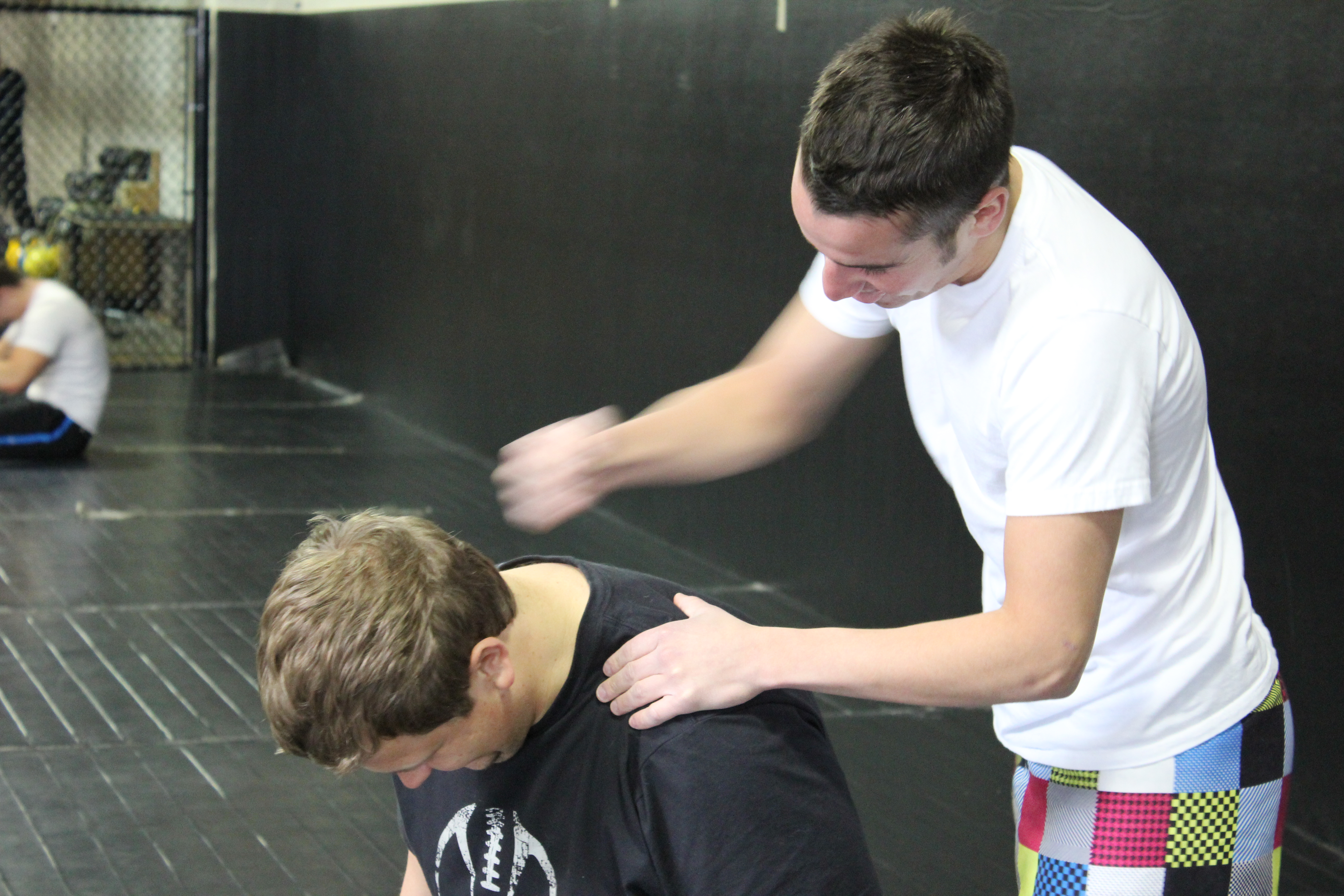
Punching the Back of the Head
Pile driving – Throwing or spiking your opponent down on their head (This is allowed in Pride, but not allowed in UFC).
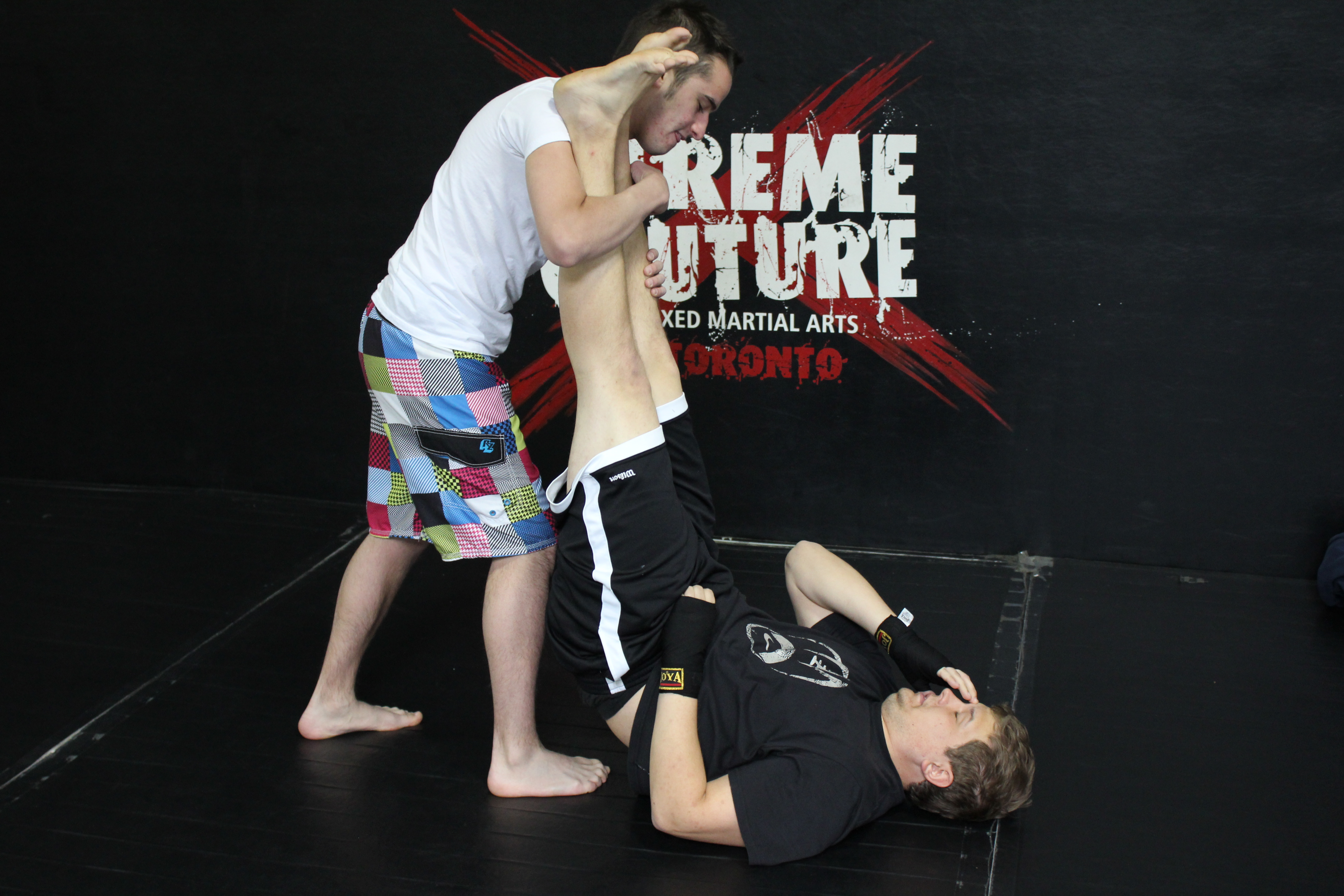
Pile Driver
Eye gouging – Poking your opponent’s eye.

Eye Gouging
Head-butt – Hitting your opponent’s head with your own.
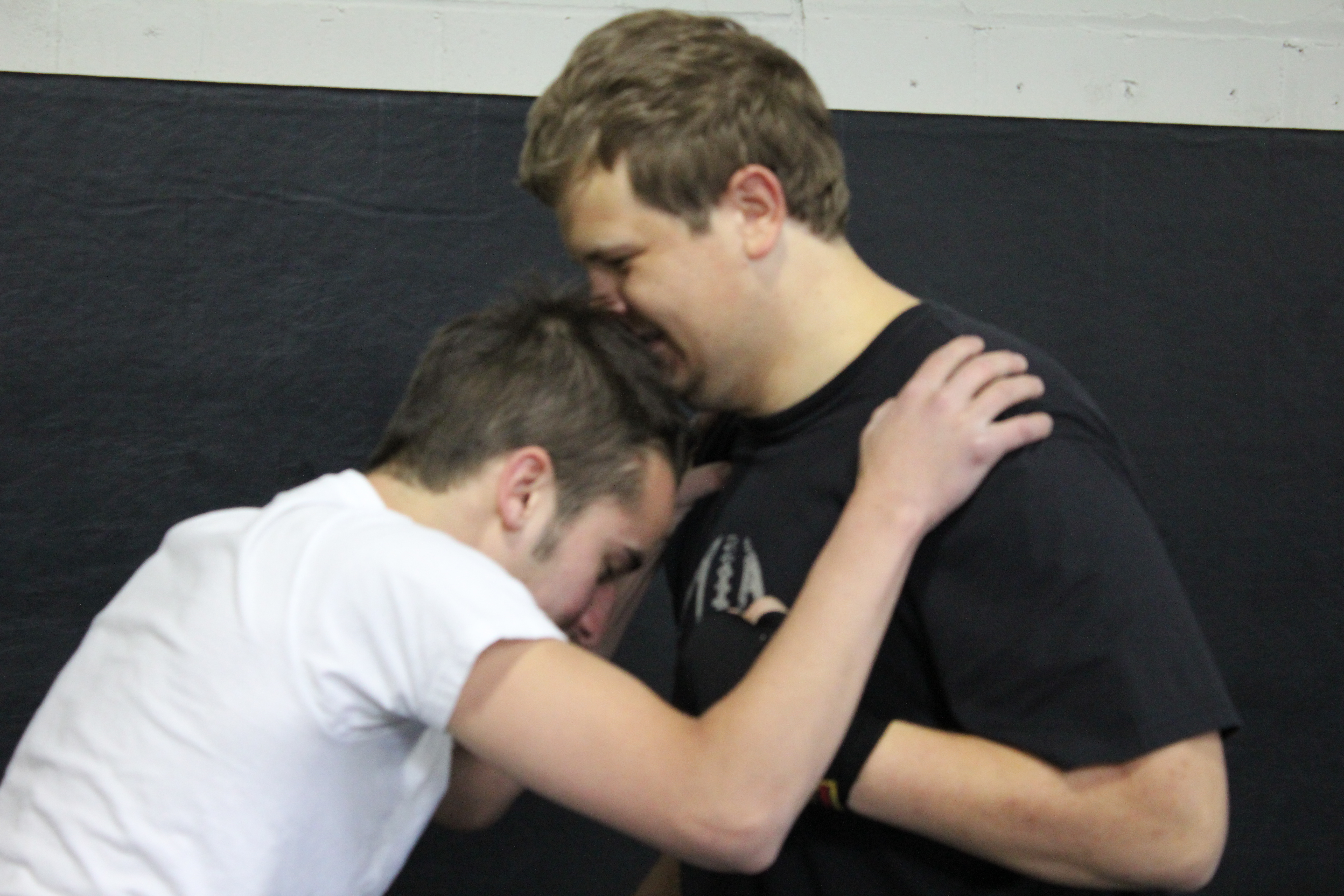
Head-butting
Hair pulling – Grabbing your opponent’s hair to gain control.

Hair Pulling
12–6 elbows – While in a mounted position, an opponent is not allowed to throw an elbow that goes straight down, (literally like the 12-6 hands on a clock). This is dangerous and can cause serious damage.

12-6 Elbows
Head stomping – If a fighter is grounded, meaning they are lower to the ground than their opponent, they cannot receive kicks, knees, or stomps to the head. This was seen in Pride but not in the UFC.

Head Stomping
Holding the fence – An opponent cannot grab the fence of the UFC’s Octagon ring. This is seen as a disadvantage to the other fighter because the opponent can avoid being taken down while holding on

Holding the Fence
Text//Dan Lopes
Photo Credit// Matt Hagerman
WEIGHT CLASS
Opposing fighters must also be within the same range of weight class. This ensures that there is no significant disadvantage between fighters.
|
WEIGHT CLASS |
UP TO __ LBS. |
UP TO __ KILOGRAMS |
|
Flyweight |
125 |
56.7 |
|
Bantamweight |
135 |
61.2 |
|
Featherweight |
145 |
65.8 |
|
Lightweight |
155 |
70.3 |
|
Welterweight |
170 |
77.1 |
|
Middleweight |
185 |
83.9 |
|
Light Heavyweight |
205 |
93.0 |
|
Heavyweight |
265 |
120.2 |
|
Super Heavyweight |
265 + |
120.2+ |
Text by: Dan Lopes
EQUIPMENT
Gloves – Fighters are required to wear 4 oz. gloves. Gloves help protect fighter’s hands, fingers, and wrists.
Mouth Guards – Covers the teeth and gums, reducing the risk of cuts and damage to the mouth and jaw.
Shorts & Bare Chest (Male) / Shorts & Sports Bra (Female)– Clothes remain as minimal as possible to prevent any assisted submissions.
*Amateur fighters, (fighters not at the professional level), are required to wear 6 oz. gloves and protective headgear.
REFEREEING
There are several ways to win a fight in MMA. A judge or referee will be in charge of calling the fight and maintaining order.
Knockout (KO) – As soon a fighter is knocked unconscious from a strike, the fight is over.
Technical Knockout (TKO) – If the referee feels that a fight needs to be stopped, he may at any point stop the fight and declare a winner. This is done when a fighter is taking excessive damage and; not intelligently defending himself, sustained a significant injury such as a broken bone or cut, or if the fighter appears to be unconscious from a strike or submission.
Submission – A fighter admits defeat due to a hold or a lock. This can be done verbally or by tapping on the opponent, referee, or the floor. Also called a ‘tap-out.’
Decision – If the fight goes the distance without a declared winner, (3 rounds for a non-title fight, 5 round for a title fight), the winner will be decided by three judges. Points are awarded to the fighter per round.
Forfeit – If the fighter chooses to back out either prior too or during the fight, he may do so and the opponent will be deemed the winner. A fighter’s ‘corner’ (his training team and/or representative) can also throw in the towel if they feel it unsafe for the fight to continue.
Disqualification (DQ) – If a fighter commits a foul, the referee will issue a warning. Three warnings will result in the fighter to be disqualified. The fighter may also be directly disqualified if their foul significantly injured the opponent where they were not able to continue fighting.
No Contest – If both fighters commit a violation, or if one fighter cannot continue due to an accidental foul, (i.e. a kick to the groin), no winner will be declared.
Text by: Dan Lopes
———————————————————————————————————-
Is MMA really more dangerous than … cheerleading?
By: Victoria DiDomenici
Football, hockey, baseball, cheerleading, and MMA are more similar than you may think.
MMA, or Mixed Martial Arts, is a sport that’s captured audiences for decades. As street fights became televised throw-downs, an underground cult-like following of MMA emerged. Now, Kickboxing Ontario is sanctioned as the official governing body for amateur MMA in the province, allowing children as young as eight years old to be trained in the controversial sport.
MMA is different from other physical contact sports because it combines various forms of martial arts such as karate, jujitsu, judo, and others that come together to result in holds and tap outs.
As a governing body, Kickboxing Ontario has made statements to media saying that sanctioning the sport will allow the organization to stem the growth of unregulated fights.
Does regulating MMA make it safe?
Many people say it doesn’t, and that parents should steer their children clear from the sport, which is notorious for sprains, facial cuts and abrasions, dislocations and fractures of minor and major bones, as well as very serious growth plate injuries which can affect, disfigure, and/or limit an individual for life.1 However, sports deemed “feminine”, such as cheerleading, actually account for 65.1 per cent of all catastrophic injuries over the past 25 years. 2
Catastrophic injury includes paralysis, amputation or loss of use of limbs, loss of vision in both eyes, and severe brain impairment by means of physical injury. 3 Cheerleading, which is a non-contact, non-physically competitive sport, puts cheerleaders at high risk for permanent injuries and even death on a daily basis.3 The gymnastic-related moves, throws, flips, and other maneuvers can be compared to those of MMA, except that cheerleading is considered a traditional sport safe for even young children to participate in, and MMA has got a bad reputation from its portrayal in movies because of the rough-and-ragged appearances of some professionals.
In the 2008 ThinkFirst-Tator study 4 , many catastrophic injuries in hockey, Canada’s national sport, were caused by hits from behind and hits to the head. In ice hockey, spine and spinal cord injury are most commonly due to a player hitting the boards head first causing axial loading to crush the spine. Even in leagues where body checking is not allowed, the chance of players hitting the boards is very high. Since a puck can travel up to 100 miles per hour 5 , players run the risk of being hit in the head, face, and/or neck by a puck. Those precautionary equipment is worn (i.e. helmets), there have been instances where life-threatening and life-long affecting injuries have been abstained regardless of protective head gear.
The high-impact level of football, and the size, bulk, weight and strength of players, put the sport high on the catastrophic classification level. Many players in the NFL and CFL are retired from football due to severe spinal cord compression injuries and the like. Yet, football in youth and schools is still blossoming with a lot of parental and media encouragement. Time Magazine says the American Orthopedic Society for Sports Medicine found that between 1989 and 2002, an average of six players per year became quadriplegic after a field-related injury.6
Collisions between fielders, and balls or bats hitting players in baseball are causes of catastrophic injuries. Dangers of baseball include head and cervical injuries, commotio cordis, and even collapsed tracheas and facial fractures. 7
With this being said, is any sport safe for children, considering each of them run such high risks of injury?
No matter what sport or activity a child wants to participate in, parents should allow their children to explore their own personal interests. Parents should thoroughly research all sports their children want to join, make sure they are placed in reputable lessons with coaches they feel comfortable with, and be active in their participation to ensure safety and provide guidance. Hockey, football, baseball, and even cheerleading all have potential for injury. While MMA is contact based, and considered a “fighting” sport, at the end of the day, the injuries that are able to be restrained in MMA can occur in any activity, organized or not.8 As long as sports are sanctioned, coaches reliable, and players guided in the appropriate direction in regards to aggression management and skill building, all the above sports can be safe.
1www.childrenshospital.org
2www.childrenshospital.org
3www.personalinjuryottawa.ca
4 www.thinkfirst.ca
5 www.thinkfirst.ca
6 www.time.com
7 http://www.ncbi.nlm.nih.gov/
8 www.childrenshospital.org
WordPress Layout and Design//Sarah Subnath and Dan Lopes